
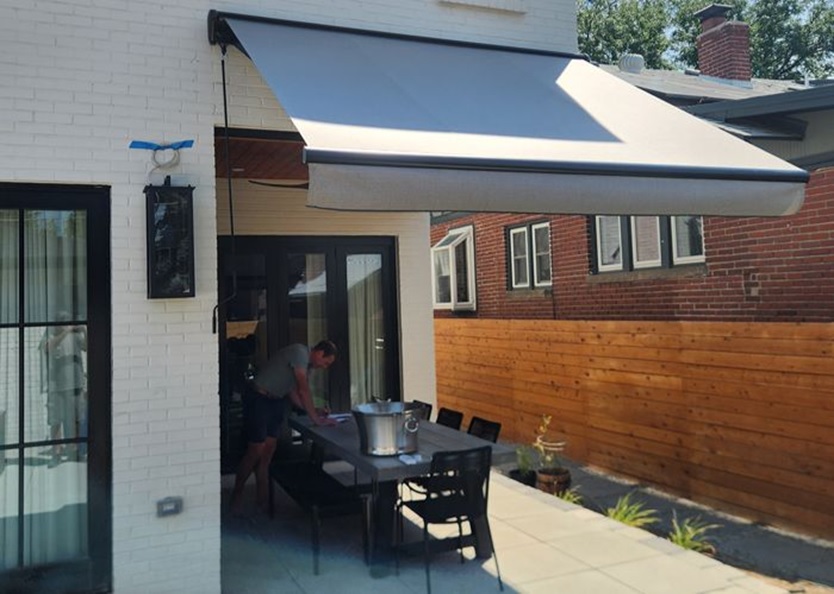
A retractable awning may look simple once it is installed. Press a button, the fabric extends, and a sunny patio gains overhead shade without adding permanent posts around the seating area. The planning behind that movement, however, starts well before the awning is mounted.
Good motorized awnings installation in Houston depends on more than choosing a fabric color and width. Mounting height, projection, sun direction, wall construction, nearby doors and windows, electrical access, furniture, and weather exposure all affect how the finished system fits the property. Looking at those details first creates a more useful shade area and a cleaner exterior appearance.
Start With the Area You Actually Want to Shade
The first measurement should not automatically be the full width of the patio.
Think about where people actually sit, dine, cook, or gather. A large patio may have one section that receives intense afternoon sun while another stays partly shaded by the house.
The awning should be planned around the area where overhead coverage will make the biggest difference.
Notice where the sun reaches the space during different parts of the day. Morning sunlight and late-afternoon glare enter from different angles, so the location and projection of the awning may change how much shade reaches the patio.
Houston’s strong sunlight makes this especially worth observing before the consultation.
Projection Determines How Far the Shade Reaches
Width covers the opening from side to side. Projection determines how far the awning extends outward from the building.
That measurement has a major effect on the usable shaded area.
A shallow projection may cover windows or the edge of a seating area without reaching a table farther out. A deeper projection extends shade farther across the patio but also needs suitable clearance and mounting conditions.
Think about how furniture is arranged before choosing the projection.
If the main dining table sits several feet from the house, measure where people actually sit rather than assuming any awning will reach that location.
For current Houston awning, screen, and exterior shade information, click here.
Mounting Height Changes the Shade Pattern
An awning needs enough height to create comfortable clearance underneath while still placing shade where it is useful.
Mounting higher does not automatically create better coverage.
The height of the mounting point, projection of the awning, angle of the fabric, and position of the sun all work together. A system mounted above tall doors may cast a different shade pattern from one installed over a lower patio opening.
Existing architecture influences the options.
Rooflines, fascia, soffits, trim, second-story windows, exterior lights, and decorative details may limit where the mounting hardware fits.
That is why the wall or structure above the patio should be reviewed before the awning size is finalized.
The Mounting Surface Needs to Support the System
Motorized awnings extend outward from the building, so the mounting location matters.
The installer needs to identify what sits behind the exterior finish and determine where the brackets belong. Siding, brick, masonry, stucco, and other surfaces create different installation conditions.
The visible exterior material is only part of the equation.
The mounting system needs suitable structural support behind it rather than depending solely on the finish covering the wall.
This is one of the reasons motorized awnings installation in Houston should begin with an on-site review rather than ordering an awning based only on patio dimensions.
Doors and Windows Need Clear Space
Patios often include sliding doors, French doors, large windows, exterior lights, cameras, and other features near the mounting area.
The awning needs to extend and retract without interfering with those components.
Consider how doors swing and where people enter the patio. A light fixture mounted above an opening may also affect bracket or housing placement.
Windows matter for another reason: shade.
An awning positioned over a patio may also reduce direct sunlight reaching nearby glass during certain parts of the day.
The U.S. Department of Energy notes that exterior overhangs and sunscreens can reduce unwanted solar heat gain by blocking sunlight before it passes through glazing. The exact effect depends on orientation, window characteristics, and shading conditions.
Shade Changes as the Sun Moves
An awning creates a fixed area of overhead coverage at any one moment, but the sun does not remain in one position.
Shade that falls directly beneath the awning around midday may stretch differently later in the afternoon.
East- and west-facing areas often experience lower-angle sunlight that reaches farther underneath overhead coverage.
Observe the patio during the hours when it becomes least comfortable.
If glare arrives from the side rather than overhead, an awning may still provide useful shade, but another exterior shade product may deserve discussion for that particular opening.
Planning around actual sun exposure gives the project a clearer purpose.
Furniture Should Be Part of the Measurements
Outdoor furniture often determines how valuable the shade feels after installation.
Measure where the dining table, sectional, grill, or lounge chairs sit rather than considering only the patio slab.
Think about normal movement too.
People need room to walk around tables and move between the house and yard while the awning is extended.
The current Houston service information describes awnings as overhead shade for patios, decks, and seating areas while leaving the ground free of permanent support posts.
That open floor area is one of the practical differences between a retractable awning and a shade structure supported by columns.
Fabric Selection Is About More Than Color
Awning fabric becomes a large visual part of the exterior whenever the system is extended.
Color and pattern should work with siding, brick, roofing, trim, doors, and other permanent materials already on the property.
But appearance is only part of the decision.
Consider how bright or dark the area should feel underneath the awning. Different fabrics create different visual effects when sunlight passes across or reflects from them.
Bring exterior color samples into the discussion when possible.
A fabric viewed indoors or on a small screen may look different when stretched across a wide outdoor area in direct Houston sunlight.
The Frame Finish Should Blend With the Exterior
Awning arms, mounting hardware, and housing remain part of the installation even when the fabric gets most of the attention.
The frame finish should make sense beside nearby trim and architectural details.
A high-contrast frame creates a different look from one selected to blend quietly with the exterior.
Current Houston service information says customers select the fabric, frame finish, control style, and projection based on the exterior space and how they plan to use it.
Considering those choices together creates a more coordinated result than choosing each component separately.
Electrical Access Should Be Discussed Early
A motorized awning needs power.
That makes electrical access part of the initial planning rather than something to figure out after the brackets are installed.
The location of the motor, controls, available power, and wiring path all influence the project.
Discuss how you want to operate the awning too.
Control options may include remote or switch-based operation depending on the selected system. Some setups may also offer compatible automation features.
The most convenient control location depends on how you enter and use the patio.
Weather Exposure Changes How the Awning Should Be Used
Retractable awnings provide adjustable shade, but they are not intended to remain extended through every weather condition.
Houston weather may change quickly, especially when thunderstorms and stronger winds move through the area.
The local service page advises retracting motorized exterior products when severe weather approaches and discusses weather precautions during the final operating walkthrough.
That operating guidance belongs in the project from the beginning.
Knowing when the awning should remain retracted protects the system and gives you a more realistic idea of how it fits into daily use.
Drainage and Rain Still Matter Around the Patio
Shade may be the main reason for installing an awning, but the surrounding patio still needs to handle water properly.
Look at where roof runoff travels, where gutters discharge, and whether the patio already has drainage problems.
The awning should fit into the existing exterior without creating conflicts with gutters, downspouts, roof edges, or other water-management features.
During motorized awnings installation in Houston, mounting and clearance decisions should account for the surrounding building components rather than treating the awning as an isolated accessory.
Commercial Patios Need Traffic Planning Too
Restaurants, hospitality properties, storefronts, and other commercial spaces may use motorized awnings over active seating or gathering areas.
In those settings, installation planning needs to account for customers, employees, tables, entrances, service paths, and operating hours.
The Houston service page states that commercial planning considers active areas, frequent operation, exposure, and installation scheduling around business activity.
The finished awning should provide useful shade without creating unnecessary obstacles within the space.
That means measuring the way people move through the area as carefully as measuring the wall itself.
The Final Test Should Include Full Extension and Retraction
Installation is not complete once the awning is attached to the building.
The system should be extended and retracted so movement, controls, alignment, and clearances are checked.
Watch how the arms move and where the front edge stops.
Make sure nearby doors, windows, lights, furniture, and architectural features remain clear.
The Houston service information says installed systems are tested before the operating controls, cleaning, and weather precautions are reviewed with the customer.
That walkthrough is the right time to ask how the awning should be stored during storms and what routine care the fabric and frame need.
Plan the Shade Before Installing the Hardware
A motorized awning works best when the planning starts with how the outdoor space is actually used. Sun direction, mounting height, projection, structural support, furniture, windows, doors, electrical access, and weather exposure all shape the finished installation.
Thoughtful motorized awnings installation in Houston brings those details together before brackets and hardware go onto the building.
When you are ready to add retractable overhead shade to a patio, deck, seating area, or commercial outdoor space, contact Conservation Motorized Screens and Awnings of Houston to schedule a consultation and explore an awning setup planned around your property.