
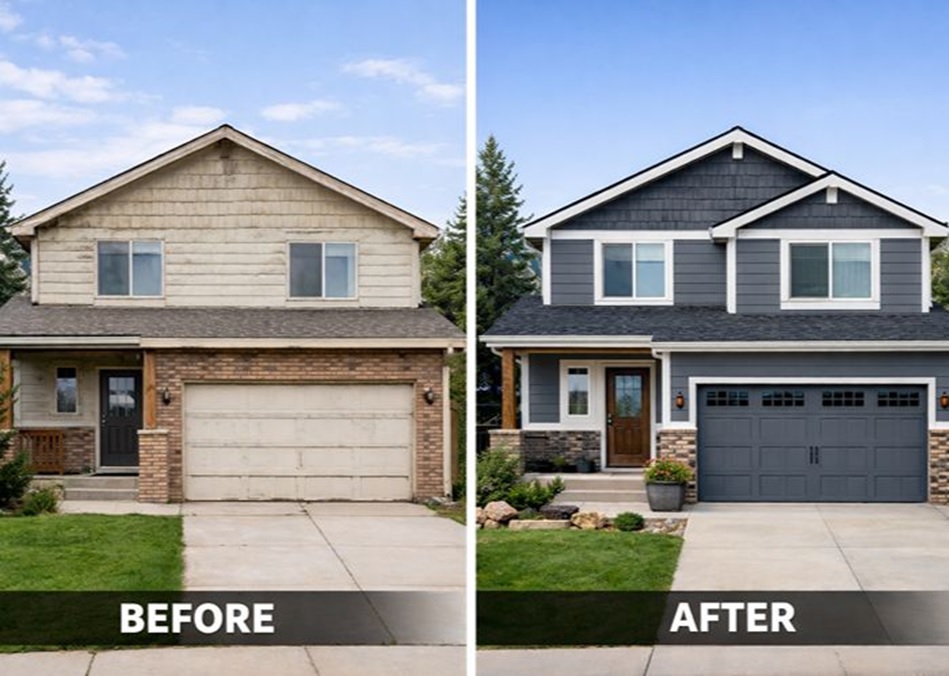
One cracked panel or a small area of impact damage does not automatically mean an entire exterior needs new siding. Focused repairs often make sense when the problem is limited and the surrounding material remains in good condition. The decision becomes less straightforward when damage starts appearing across several walls, repairs keep returning, or the existing siding has reached a similar level of wear throughout the property.
Planning siding replacement means looking beyond the worst-looking panel. Age, repeated damage, moisture marks, loose sections, fading, maintenance demands, and the condition beneath the siding all contribute to the decision. Looking at the exterior as a complete system makes it easier to decide when another localized repair still makes sense and when replacing a larger section creates a more practical path forward.
One Damaged Area May Still Be a Repair
Localized damage is often the easiest situation to evaluate. A storm may affect a small group of panels, one section may loosen, or an isolated impact may crack otherwise sound siding.
If matching materials remain available and the surrounding exterior is still performing well, repairing the affected area may avoid unnecessary work elsewhere.
Conservation Siding Replacement currently describes siding repair as focused work for cracks, gaps, loose panels, impact damage, failed joints, and other isolated concerns. The company also notes that matching existing materials may be possible depending on what is already installed.
The important question is how much of the exterior is actually affected. A small problem surrounded by stable siding creates a very different project from similar damage appearing across multiple elevations.
Repeated Repairs Change the Equation
One repair may solve a specific problem. Returning to the same wall every year is different.
Repeated failures may indicate that more of the siding has reached a similar stage of wear. Panels nearby may have experienced the same sunlight, storms, temperature changes, and years of exposure even if they have not failed yet.
Keep track of where repairs occur.
If contractors have patched several sections over a relatively short period, compare those areas with the rest of the exterior. Look for loose material, fading, cracks, warped boards, corrosion, gaps, or repeated moisture marks.
People comparing options with a Siding Replacement Company should bring that repair history into the conversation. It provides useful context when deciding whether another isolated fix or a broader replacement makes more sense.
Different Sides of the House May Age Differently
Siding does not experience identical conditions on every wall.
One elevation may receive intense afternoon sun. Another faces prevailing wind and rain. Dense landscaping may keep part of the exterior shaded and damp longer, while a large roof overhang protects another section.
Conservation Siding Replacement specifically notes that sun exposure, prevailing wind, moisture patterns, landscaping, and previous repairs may cause two sides of the same building to need different work.
That means siding replacement does not always have to be an all-or-nothing project. One elevation may still qualify for repair while another has enough widespread deterioration to justify replacement.
Looking at each side separately creates a scope based on actual conditions rather than assuming the entire exterior has aged evenly.
Matching Old Siding May Become Difficult
Repairing one panel is simpler when the replacement material closely matches what surrounds it.
That becomes harder as siding gets older.
Manufacturers change colors and profiles. Existing material also fades after years of sun and weather exposure. Even when the original color is technically available, a brand-new panel may look noticeably different beside siding that has been outdoors for a decade or more.
Texture matters too. A replacement board with a slightly different grain or profile may stand out once installed across a larger visible wall.
At some point, the challenge of creating consistent repairs becomes part of the argument for replacing a larger section. Appearance should not be the only consideration, but it is reasonable to include it when several mismatched patches begin changing the overall exterior.
Loose or Warped Areas Deserve a Broader Look
One loose panel may have a simple cause. Multiple loose or warped sections deserve more attention.
Fastening, temperature movement, impact, age, and material condition may all influence how siding behaves. If similar changes appear across several sections, repairing one obvious spot may leave nearby areas untouched.
Look along long walls from an angle instead of standing directly in front of them. Changes in alignment are often easier to see that way.
Also check corners, areas below windows, wall transitions, and sections near rooflines. Patterns across the exterior provide more useful information than one damaged piece viewed up close.
Removing Old Siding Reveals What Was Hidden
One important difference between repair and replacement is how much of the underlying wall becomes visible.
When a full section of aging siding comes off, installers get an opportunity to inspect surfaces that may have been covered for years. Previous repairs, damaged sheathing, questionable flashing, or moisture marks may become easier to identify.
Conservation Siding Replacement states that its replacement service removes failing materials and checks the underlying surfaces before new siding is installed. If hidden wall damage appears, work pauses in the affected area so the exposed condition may be evaluated before it is covered again.
That step matters because a fresh exterior should not simply conceal a problem underneath it.
The Wall Behind the Siding Still Manages Water
Siding is the first visible defense against rain, but exterior walls are designed with additional water-management layers behind the cladding.
The U.S. Department of Energy’s Building Science Education program explains that most exterior cladding systems may allow some water through joints and gaps. A water-resistive barrier behind the siding provides a drainage surface that directs this moisture downward and away from the wall cavity.
The DOE also notes that this layer should integrate with flashing around windows, doors, wall penetrations, and roof-to-wall intersections.
This becomes particularly relevant during siding replacement because removing older material creates access to portions of that drainage system that are normally hidden.
Moisture Marks Should Not Simply Be Covered
Dark staining, soft areas, peeling finishes, or recurring moisture marks deserve evaluation before new siding goes over the wall.
The visible siding may not be the only material affected.
If water has repeatedly reached the layers underneath, the contractor needs to understand what condition those materials are in after the old siding is removed.
This does not mean every stain signals major wall damage. The condition needs to be evaluated after the area becomes accessible.
Replacing the siding without looking at the underlying surface would remove the visible symptom while leaving unanswered questions behind the new exterior.
Windows and Doors Influence the Replacement Work
Windows and doors interrupt large areas of siding and create many of the transitions installers need to finish carefully.
Existing trim may remain in some projects and change in others. Flashing, siding thickness, new profiles, and exterior design choices may influence how those openings look once the work is complete.
This is also a useful time to decide whether old trim still fits the direction of the exterior.
A new siding color may look very different beside existing window and door trim. Some projects benefit from maintaining strong contrast, while others look more cohesive with a quieter combination.
Planning these details before materials are ordered reduces last-minute design decisions once installation is underway.
Material Choice May Change During Replacement
Replacing siding gives you an opportunity to reconsider what material belongs on the exterior rather than automatically recreating what was there before.
Conservation Siding Replacement currently lists vinyl, composite, fiber cement, metal, cedar wood, stone, board and batten, and engineered wood among its available siding directions.
Each brings different characteristics involving appearance, maintenance, weather resistance, texture, and installation.
The existing material may still be the right choice. In other cases, years of maintenance experience may lead you toward something different.
Consider how much upkeep you want, which architectural style fits the building, how the walls are exposed to weather, and what type of appearance you want from a larger exterior update.
Full Replacement Creates More Freedom With Color
Small repairs usually need to blend with the existing exterior. Replacement opens the door to a larger design change.
Color, profile, orientation, trim contrast, and accent materials may all be reconsidered together.
A home with traditional horizontal siding might introduce board and batten on a gable or another architectural section. Stone may become an accent around the entrance or foundation. A darker or lighter exterior may completely change how trim and roof colors appear.
Look at the entire property when choosing those finishes.
The roof, windows, garage doors, masonry, landscaping, and other permanent elements should be part of the color discussion instead of evaluating a small siding sample by itself.
Maintenance Expectations Belong in the Decision
A siding material that looks attractive today should also fit the amount of exterior care you want to manage later.
Vinyl, fiber cement, cedar, composite, metal, and engineered products do not have identical maintenance requirements.
Cleaning, painting, refinishing, inspection, and repair needs vary by material.
Think about your experience with the current siding. If frequent upkeep is one reason you are considering replacement, repeating the same material without discussing alternatives may miss an opportunity to reduce that burden.
The right choice balances appearance with how you expect to maintain the exterior over the coming years.
Replacement Work Needs a Plan Around Daily Life
A complete exterior project involves crews moving around several sides of the property.
Landscaping, patios, outdoor furniture, gates, driveways, pets, entry doors, and regular household routines may all interact with the work area.
Conservation Siding Replacement states that its project planning includes reviewing access, landscaping, outdoor furniture, entry points, and daily routines before installation starts.
Ask how materials will be stored and which areas crews expect to work on first. If one entrance needs to stay accessible, mention it early.
A clear sequence makes a larger siding replacement project easier to live around while different elevations are under construction.
Commercial Properties Need Similar Planning
Replacement decisions apply to commercial buildings too, but access may carry even more weight.
Offices, retail properties, multifamily buildings, and warehouses may need entrances, loading zones, parking areas, or occupied sections to remain open throughout the project.
Conservation Siding Replacement states that commercial work may be divided into phases based on operating hours, occupied spaces, and site access.
The siding itself also needs to fit the building’s use. Cleaning demands, weather exposure, appearance, fire performance, and compatibility with the existing exterior system may influence material selection.
Planning those factors before removal begins reduces conflicts once the property is actively under construction.
Repair History Should Stay With the Property
Once replacement work begins, old patches and repairs disappear along with the siding.
Before that history is lost, keep records of what has happened over time.
Photographs, contractor invoices, warranty documents, storm damage records, and notes about recurring moisture may provide useful context during the project.
After replacement, save the new material specifications, color names, warranty information, and photographs in the same place.
These records make future repairs easier because you know exactly which products and finishes were installed instead of trying to match them from memory years later.
Know When the Exterior Needs a Fresh Start
Repair remains useful when damage is genuinely isolated and the surrounding siding still has plenty of life left. Replacement becomes more practical when deterioration spreads across several sections, materials become difficult to match, repeated repairs continue, or removing the old exterior provides an important opportunity to evaluate what sits underneath.
Good siding replacement is not about replacing every panel at the first sign of wear. It is about recognizing when individual repairs are no longer solving the broader exterior problem.
When your siding is faded, cracked, loose, storm damaged, or requires repeated repairs, contact Conservation Siding Replacement to review the existing exterior, compare material options, and decide which sections need repair and which may be ready for a larger update.